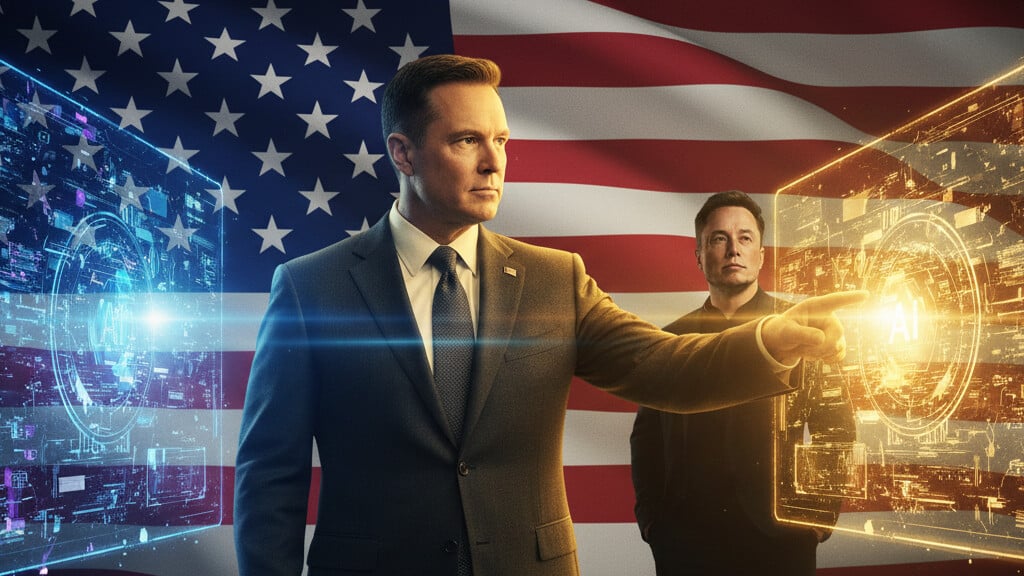
Editorial illustration
The Pentagon has a new favorite AI company, and it’s not the one that thinks war is problematic.
Defense Secretary Pete Hegseth made waves in January when he announced the Department of Defense’s new partnership with Elon Musk’s xAI, and in the same breath took aim at what he called “equitable AI” infected with “DEI and social justice infusions that won’t allow you to fight wars.” He didn’t name Anthropic directly. He didn’t need to.
This week, Anthropic delivered a master class in arrogance and betrayal as well as a textbook case of how not to do business with the United States Government or the Pentagon.
Our position has never wavered and will never waver: the Department of War must have full, unrestricted…
— Secretary of War Pete Hegseth (@SecWar) February 27, 2026
The AI company behind Claude — the chatbot that competitors and critics alike have called “too woke for war” — had been in talks with the Pentagon about military applications. Those talks have effectively ended, and the fallout reveals something much bigger than a single government contract. It exposes the fundamental tension at the heart of the AI industry: can you build technology powerful enough to defend a nation while simultaneously restricting what it’s allowed to think?
What Happened with Anthropic
Anthropic, founded by former OpenAI researchers who left over safety concerns, has built its brand around “responsible AI.” The company has guardrails, safety protocols, and an institutional culture that prioritizes caution over capability. In the consumer market, that’s a selling point. In the defense market, it’s a liability.
According to multiple reports, Anthropic refused to grant the Pentagon unrestricted access to its technology. The company’s safety-first approach meant that certain military applications — targeting, threat assessment, operational planning in contested environments — ran headlong into AI guardrails designed to prevent the technology from being used in ways the company’s researchers considered harmful.
The Pentagon’s response was predictable and, frankly, correct: if your AI can’t fight a war, we’ll find one that can.
The xAI Alternative
Enter Elon Musk’s xAI and its Grok platform. Where Anthropic sees guardrails, xAI sees unnecessary restrictions. Where Claude hedges and qualifies, Grok answers the question. The philosophical difference between the two companies is not subtle, and in a wartime environment, it becomes existential.
Hegseth’s January announcement signaled a clear strategic direction: the military wants AI that serves the mission, period. Not AI that lectures operators about ethical considerations while missiles are inbound. Not AI that refuses to process targeting data because its safety team in San Francisco has concerns about “harm reduction.”
The Bigger Culture War
This story is about more than defense contracts. It’s about whether the most powerful technology in human history will be shaped by the values of Silicon Valley progressives or by the practical demands of national security. The Anthropic-Pentagon split is a microcosm of the same fight playing out across every industry: the clash between ideological purity and operational reality.
Anthropic’s researchers genuinely believe they’re building AI responsibly. They may even be right about some of their safety concerns. But when a nation is at war — when American servicemembers are in harm’s way and decisions must be made in milliseconds — “responsible AI” that can’t function in a combat environment isn’t responsible at all. It’s useless.
The Pentagon chose capability over ideology. In wartime, that’s not a controversial decision. It’s the only decision.
Providence watches over the bold.
About The Author
